Celebrating Milestones in Polyamorous Relationships: Honoring What You've Built
By PolyVous Editorial Team — Published July 19, 2026 — 7 min read
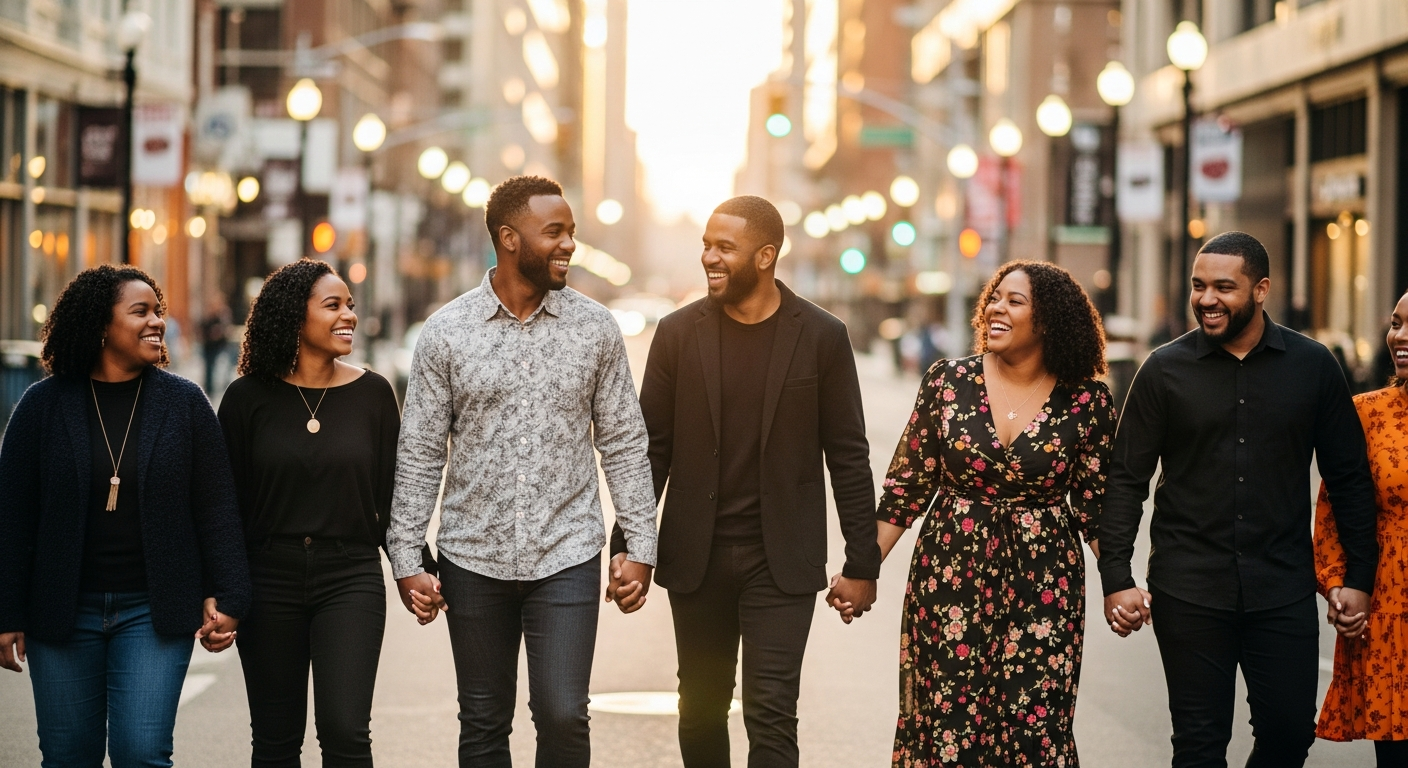
Polyamorous relationships deserve to be celebrated — but the traditions built around monogamy don't always fit ENM. Here's how to mark anniversaries, achievements, and relationship milestones in ways that honor the actual connection you have.
Relationships deserve to be celebrated. That's not a radical claim — but it has practical implications in polyamory that are worth thinking through.
Mainstream relationship milestone culture is built around monogamy: the first date, the anniversary, the engagement, the wedding. These traditions aren't inherently wrong, but they're designed for a specific relationship structure. Polyamorous practitioners often need to build their own traditions from scratch — and many find that the process of doing so reveals something important about what they actually value in their relationships.
Why Milestone Marking Matters
Deliberately marking milestones does several things that aren't obvious at first:
It communicates that the relationship is real and valued. In a culture that often treats non-primary relationships as "less than," deliberately celebrating a relationship is an act of affirmation. It says: this matters. I notice it. I'm glad it exists.
It creates shared history. Relationships accumulate meaning through remembered experience. Marking moments — with rituals, photos, specific meals, meaningful places — builds a shared narrative that strengthens the connection over time.
It creates natural checkpoints. An anniversary is a natural moment to reflect on how the relationship has grown and what you want for the year ahead. Without these checkpoints, years can pass in a relationship without either partner pausing to appreciate and assess.
Types of Milestones Worth Marking
First-year and subsequent anniversaries. The anniversary of a relationship's beginning — however you define "beginning" — is worth noting. For some people that's the first date; for others it's the moment both people acknowledged the relationship as what it was; for others it's some other significant early moment.
The "first time" milestones. First overnight, first trip together, first meeting of important people in each other's lives — these are genuine relationship benchmarks and deserve acknowledgment.
Transitions and evolutions. When a relationship changes form — from long-distance to same-city, from casual to committed, from nesting partners to living separately — the transition is worth marking, even if the change is bittersweet.
Overcoming hard things. A relationship that navigated a difficult period — a conflict, a health challenge, a major life upheaval — and came out stronger on the other side has something worth celebrating.
The ordinary remarkable. Sometimes the milestone is simply: "We've been doing this for three years and I'm genuinely glad." That's enough. The extraordinary version of this is the ordinary one.
Building Your Own Traditions
Because ENM doesn't have inherited traditions for most of these moments, practitioners often build their own. Some examples from the PolyVous community:
- A special dinner — at the restaurant from a meaningful early date, or a new place that becomes "the anniversary restaurant"
- A letter or card — written on an anniversary reflecting on the year, kept and reread in future years
- A shared playlist or photo album — curated together as a record of the relationship's texture in a given period
- A ritual object — something small and meaningful that appears in their space together on anniversaries
- The "relationship state of the union" — a more intentional version of a check-in, done annually, asking bigger questions about the relationship's arc
Navigating Multiple Relationships and Milestone Overlap
In polyamory, there's a practical question: how do you celebrate multiple relationships without anniversaries and milestones becoming logistically overwhelming?
Most practitioners find that the answer is simplicity. Not every milestone requires an elaborate event. A heartfelt message, a meaningful hour of intentional time together, a small ritual — these carry the weight of acknowledgment without requiring major logistical coordination.
The key is noticing and naming. A text on an anniversary that says "I remember today is the day we met, and I'm glad we did" does more relational work than its simplicity suggests.
What About Relationships Without Clear "Start Dates"?
Many polyamorous relationships don't have a single clean beginning — they emerged gradually, or they transformed from friendship, or both people have different memories of when things became what they are. That's fine. Choose a date that feels meaningful, or celebrate a different kind of milestone: the first time you talked about the relationship openly, the first significant moment you both remember, the moment you decided to define it.
"We don't know exactly when we started. So we celebrate the night we had the conversation about what we were. That conversation changed everything." — PolyVous community member
PolyVous: Connections Worth Celebrating
PolyVous is built for people who take their relationships seriously — who show up, communicate honestly, and celebrate what they've built.
Join PolyVous — and find connections worth honoring.