Polyamory in Black and Brown Communities: Building Love Beyond Convention
By PolyVous Editorial Team — Published March 16, 2026 — 8 min read
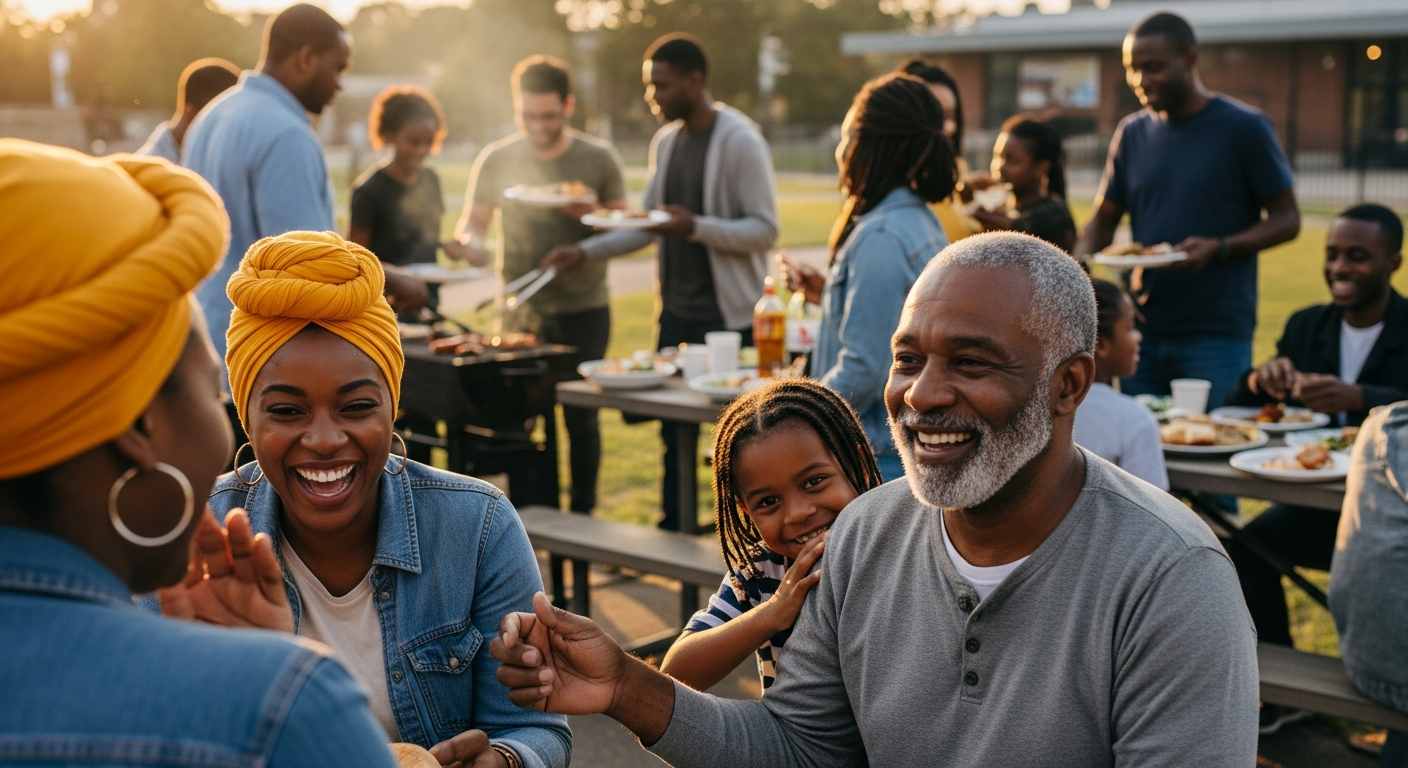
Polyamory has deep roots in African and Indigenous traditions of chosen family, communal kinship, and expansive love. This article explores how Black and Brown communities are reclaiming and reimagining non-monogamous relationships on their own terms — and why representation in the poly world matters.
Reclaiming a Legacy
Long before the word "polyamory" existed, Black and Brown communities around the world practiced forms of expansive, communal love that went far beyond the nuclear family model.
In West African traditions, extended family networks — including multiple co-wives, aunts, uncles, elders, and chosen kin — formed the backbone of social life and child-rearing. In many Indigenous cultures of the Americas, relationship structures were fluid and community-centered. The nuclear family as the exclusive unit of love and support is largely a European colonial imposition — one that many Black and Brown communities are now consciously questioning.
For many BIPOC people exploring polyamory today, the journey feels less like an experiment and more like a homecoming.
Why Polyamory Is Growing in Black and Brown Communities
Several factors are driving the growing visibility of polyamory in Black and Brown communities:
Mental health awareness. As therapy and emotional wellness become more normalized in communities of color, more people are examining inherited relationship patterns and asking: Is this what I actually want, or is this what I was told to want?
Online community. Social media has connected Black and Brown poly practitioners who once felt isolated. Hashtags, podcasts, YouTube channels, and Instagram accounts specifically for BIPOC poly people have created visibility and belonging that didn't exist a decade ago.
Feminist and womanist consciousness. Black feminist thought, in particular, has a long tradition of questioning patriarchal relationship norms. Many Black women find polyamory aligned with their values of self-determination, bodily autonomy, and refusal to shrink for a partner.
LGBTQ+ community crossover. The Black queer community has long practiced relationship structures beyond the heteronormative binary. As polyamory has become more visible, many Black and Brown queer people find natural overlap with relationship anarchy and ENM.
The Challenges Are Real Too
It would be dishonest to discuss polyamory in Black and Brown communities without acknowledging the particular challenges.
Religious and cultural pressure is significant. Many Black and Brown families have deep Christian, Muslim, or culturally conservative roots that treat monogamy as non-negotiable. Coming out as polyamorous can mean risking family relationships and community standing.
Fetishization and stereotyping. Black and Brown poly people frequently report being fetishized on mainstream dating platforms — their race sexualized as part of the appeal rather than seen as incidental to who they are. This is one of the reasons platforms designed specifically for the poly community matter so much.
The "strong Black woman" trap. Black women in poly relationships sometimes find themselves doing a disproportionate share of emotional labor — a pattern that reflects broader gender dynamics. Naming and resisting this pattern is important.
Building Poly Community on Your Own Terms
What's emerging in Black and Brown poly communities is something powerful: a polyamory that doesn't ask us to leave our culture at the door.
This looks like:
- Poly meetups and brunches specifically for BIPOC people
- Online communities where the default is Black and Brown faces and experiences
- Dating platforms — like PolyVous — where diverse representation is a priority, not an afterthought
- Podcasts and YouTube channels centering BIPOC poly voices
- Chosen families that explicitly name their structure and celebrate it
For Black and Brown people, polyamory at its best isn't borrowing a white, countercultural framework. It's drawing on deep cultural wells of communal love, chosen kinship, and radical care — and building something that's authentically yours.
You Belong Here
PolyVous was built with diversity at its center. We believe that love in all its forms deserves a beautiful, discreet, dignified home — and that includes the love of Black and Brown poly practitioners who have too long been invisible in mainstream non-monogamy spaces.
Join PolyVous today and find your community.