Polycule Dynamics: How Group Chemistry, Alliances, and Tensions Form in Relationship Networks
By PolyVous Editorial Team — Published August 12, 2026 — 8 min read
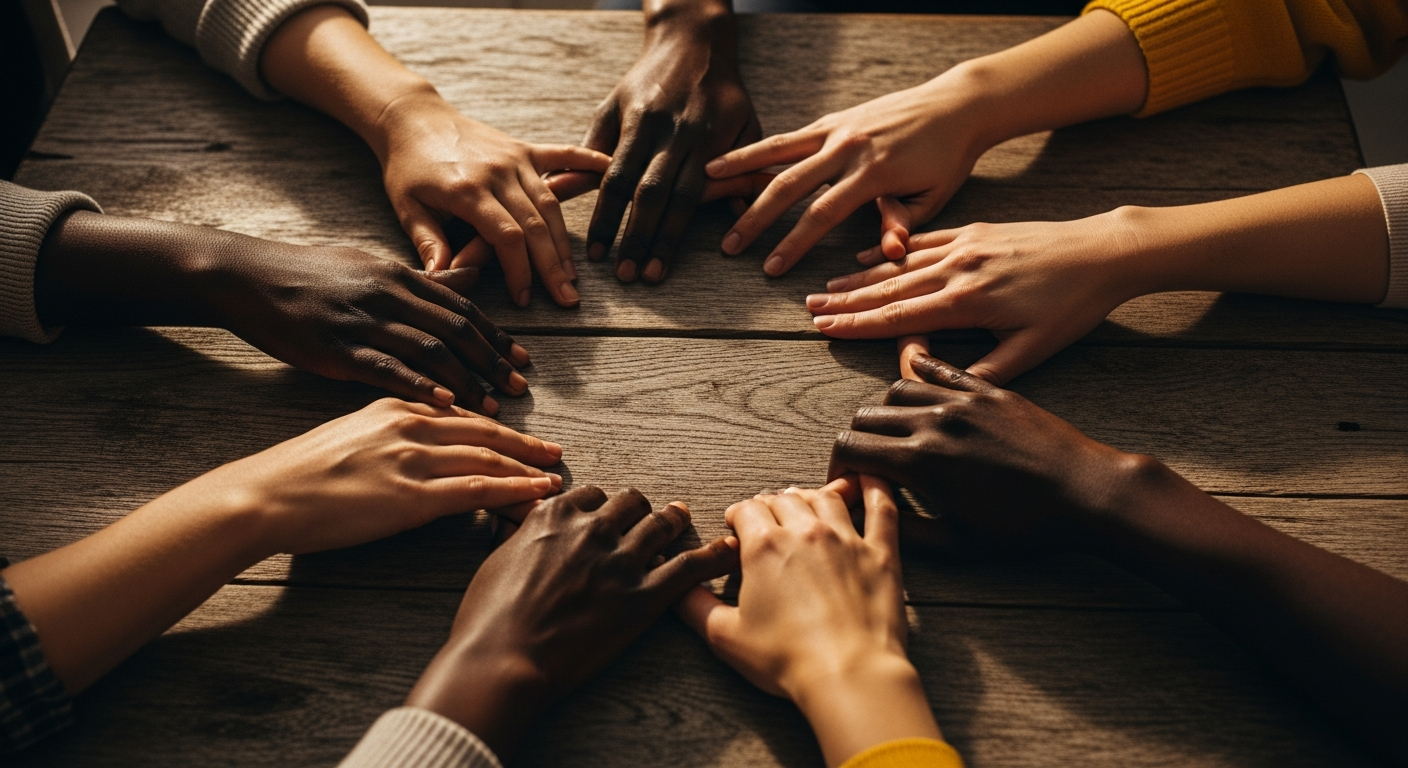
A polycule is more than a collection of individual relationships — it's a social system with its own emergent dynamics. Understanding how group chemistry, alliances, and tensions form helps practitioners navigate their networks more skillfully.
When polyamorous practitioners talk about their "polycule" — the network of people connected through their romantic and intimate relationships — they often mean something more than the sum of individual partnerships. They mean a social world.
That social world has its own chemistry. It has people who click effortlessly and people who never quite connect. It has alliances that form organically and tensions that simmer without always surfacing explicitly. It has shared humor, shared history, shared aesthetic preferences, shared values — and sometimes significant divergences from all of those.
Understanding polycule dynamics as a system, not just as a collection of dyads, helps practitioners navigate them more skillfully.
How Polycule Chemistry Forms
Chemistry in a polycule — the quality of the social system overall — is influenced by several intersecting factors:
Shared values. Polycules where people share fundamental ethical commitments, communication styles, and relationship philosophies tend to have smoother dynamics than those where these differ significantly. This doesn't mean everyone needs to be identical, but significant misalignment in core values creates friction that individual relationships struggle to contain.
Metamour relationships. The quality of the relationships between people who share a partner — metamour relationships — has an outsized effect on polycule health. Metamours who genuinely like each other, or who have a warm parallel relationship with comfortable distance, create a fundamentally different polycule atmosphere than metamours in chronic tension.
Information and transparency cultures. Some polycules operate with high transparency — most people in the network know most things about most relationships within it. Others are more compartmentalized. Neither is inherently better, but mismatched expectations about information sharing create significant problems.
Proximity and contact frequency. Polycules where members see each other regularly — through shared social activities, overlapping friend groups, or cohabitation — develop richer (and more complex) social dynamics than those where members rarely encounter each other.
Common Polycule Tensions
The information asymmetry problem. In any network where one person knows more about what's happening than others, or where information flows unevenly, trust erodes. The person who feels "the last to know" about developments in their own network experiences this as a form of exclusion.
The shared resource conflict. When multiple relationships are drawing on the same person's time, emotional energy, living space, or financial resources, competition for those resources can create network-level tension even when no single relationship is doing anything wrong.
The alliance dynamic. When conflict arises between two polycule members, others tend to align — often unconsciously — with the party they're closer to. These alliances can transform two-person conflicts into network-wide schisms if they're not carefully managed.
The entry and exit disruption. New partners joining the network and significant departures both disrupt polycule equilibrium. The arrival of a new partner changes the time-resource equation for everyone connected to the person who's entering a new relationship. A significant breakup may remove a person who was central to the network's social cohesion.
Cultivating Positive Polycule Culture
The most cohesive polycules practitioners describe tend to share a few features:
Deliberate investment in metamour relationships. Rather than leaving metamour connections to develop (or not) by accident, people actively put some investment into knowing each other — not as romantic partners' shared property, but as independent people with their own value.
Explicit network-level agreements. Beyond the bilateral agreements of individual relationships, some polycules develop shared norms — about communication, about disclosure, about how conflicts are expected to be handled — that create a shared culture rather than a collection of different relationship agreements.
Regular network gatherings. Many cohesive polycules describe having regular low-key social events where the network comes together — dinners, game nights, outings — that are about the network as a whole rather than any particular relationship.
Tolerance for complexity and imperfection. The polycules that survive challenging periods are those where members can hold both affection for the network and honest acknowledgment of its difficulties simultaneously — rather than requiring everything to be fine in order to feel secure.
PolyVous members with long-term stable polycules often describe them as chosen families — relationships that have the history, mutual investment, and resilience that the term implies.
"My polycule is five people. We've been overlapping in various configurations for six years. Some relationships have changed form. The network itself has stayed. That feels like something to protect." — PolyVous community member
PolyVous: Where Networks Are Built to Last
PolyVous is designed for practitioners who are building not just individual relationships but relationship networks — communities of connection that sustain and evolve over time.
Join PolyVous — and find your network.