Polyamory and the LGBTQ+ Community: Why Queer People Lead the ENM Conversation
By PolyVous Editorial Team — Published April 5, 2026 — 8 min read
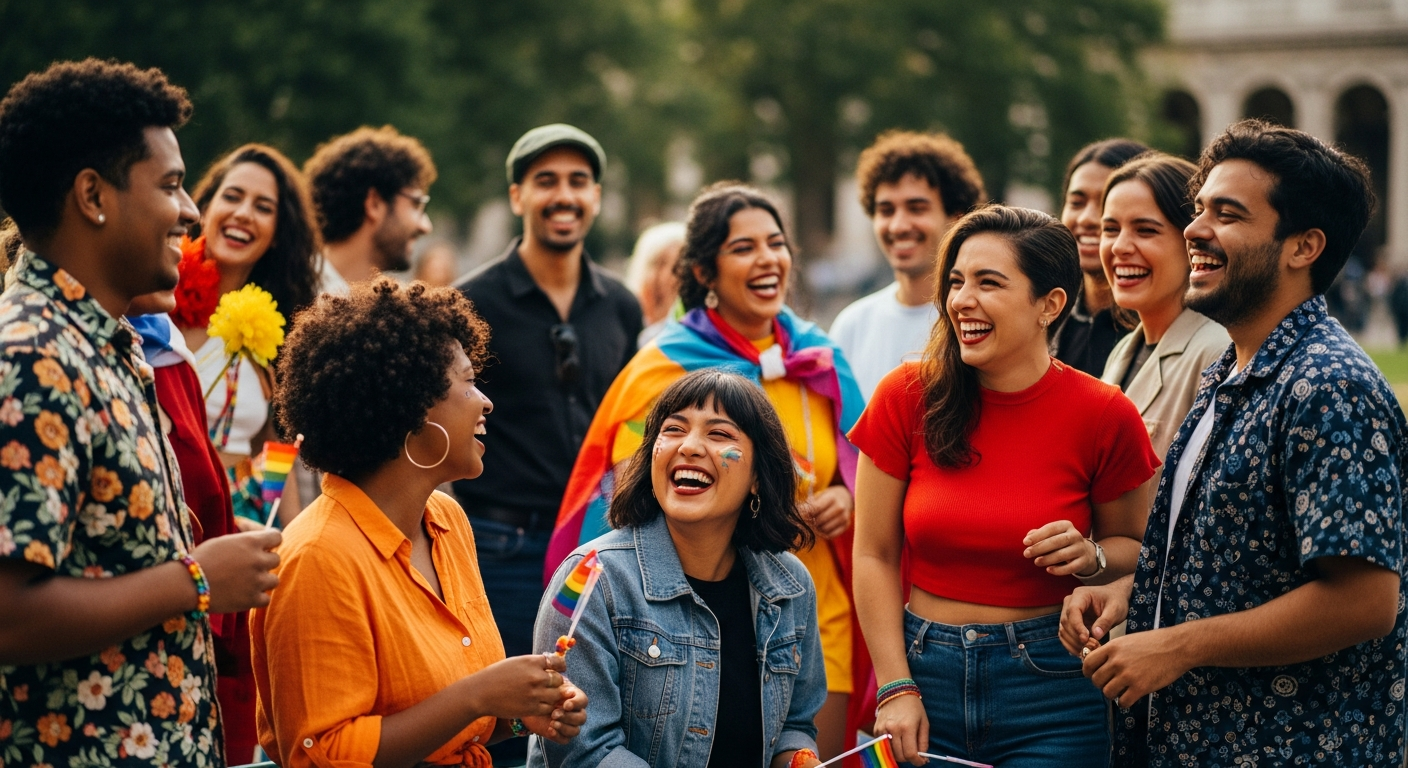
Queer communities have long practiced relationship structures outside the mainstream. Here's why LGBTQ+ people are disproportionately represented in polyamory — and what the broader ENM world can learn from queer relationship culture.
The Numbers Tell a Clear Story
Survey after survey finds the same thing: LGBTQ+ people are significantly more likely than heterosexual people to identify as polyamorous or practice consensual non-monogamy. A 2021 YouGov survey found that bisexual people are more than twice as likely to practice ENM compared to straight respondents. Research published in Psychology & Sexuality found that gay, lesbian, and bisexual individuals were all substantially more likely to engage in CNM.
Queerness as Training for Non-Default Relationships
When you grow up knowing that the mainstream relationship script doesn't fit you, you develop the ability to question the script itself.
For most LGBTQ+ people, there was a moment of realizing that the romantic trajectory society assumed wasn't their trajectory. That moment of recognition — "I don't fit the default" — initiates a kind of critical questioning that extends naturally to other relationship norms. Many queer people report that once they'd examined the assumption that all romantic relationships must be heterosexual, questioning other assumptions — about monogamy, about the relationship escalator — felt like the same kind of liberatory work.
Chosen Family: A Foundation of Queer Culture
The concept of chosen family is foundational in LGBTQ+ communities — and it is, in essence, a non-monogamous approach to love and commitment.
For generations, queer people who were rejected by biological families built intentional networks of deep commitment with friends, partners, and community members. This cultural heritage directly informs how many queer people approach romantic relationships. The idea that deep commitment can be distributed across multiple people is not foreign to most LGBTQ+ people — it's often how their communities have always functioned.
What the ENM World Has Learned From Queer Communities
Queer relationship culture has contributed foundational concepts to the broader ENM conversation:
Chosen family frameworks. The polyamory community's emphasis on building intentional relationship networks draws directly from queer traditions.
Communication as relationship practice. Queer relationships, which can't rely on gendered scripts, have long required explicit communication about what each person needs.
Fluid relationship categories. Queer community culture has long normalized relationships that shift in form without ending.
Activism and visibility. LGBTQ+ activists' work on relationship recognition has created important legal and cultural space that ENM people also occupy.
Building for Everyone
There are questions about whose voices are centered in ENM spaces, which have historically been predominantly white. PolyVous was built with explicit attention to diversity — creating a space that reflects the full spectrum of people who practice ENM, including the queer and LGBTQ+ communities who have shaped so much of its culture.
Join PolyVous — a platform built for all of us who love outside the default.